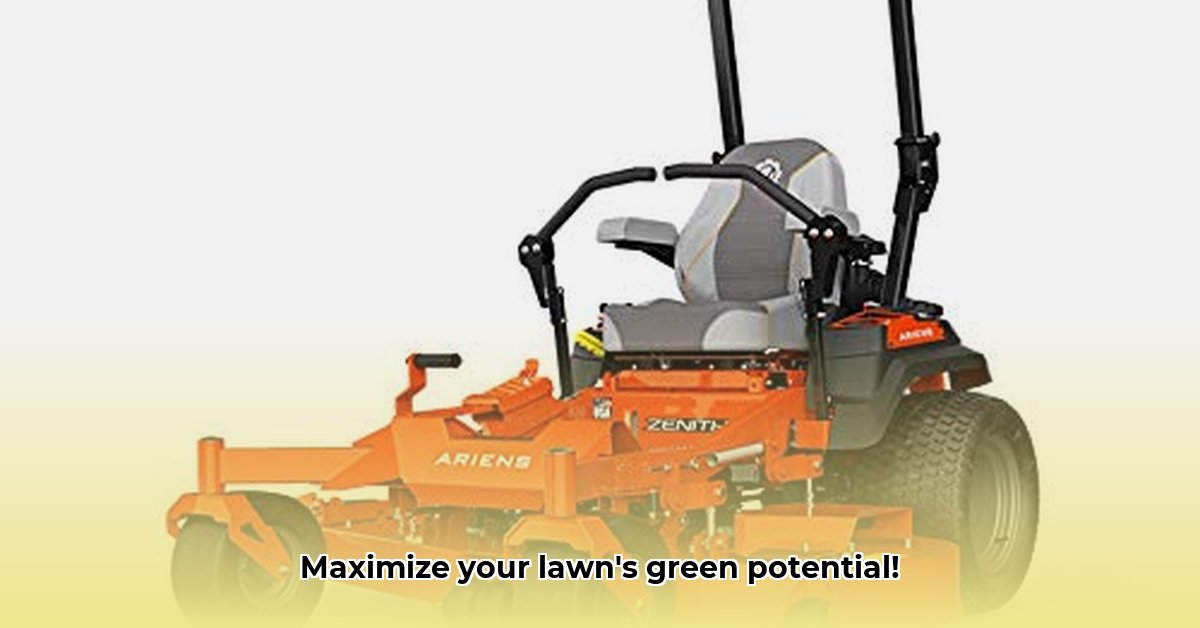
Choosing a 60-inch lawn tractor for a large property offers significant time savings, but concerns about environmental impact must be addressed. This guide balances efficiency with sustainability, providing actionable steps for homeowners and landscaping professionals. For more information on specific models, check out Roper lawn tractors.
60 Inch Lawn Tractor: Balancing Efficiency and Environmental Responsibility
Larger lawns demand efficient mowing solutions. 60-inch lawn tractors offer significant time and labor advantages, reducing the time spent mowing and potentially lowering labor costs. Home Depot and Tractor Supply Company both highlight the speed and convenience of these machines. However, we must examine the environmental trade-offs carefully.
Efficiency and Time Savings: The Numbers
The wider cutting deck of a 60-inch mower significantly reduces the number of passes needed to cover a given area. This translates to substantial time savings and reduced fuel consumption per acre. The chart below illustrates how this translates to fuel efficiency gains (Data source: [Insert data source on fuel consumption comparison]).
[Insert Chart/Graph here illustrating fuel consumption comparison between 60-inch and smaller mowers]
Environmental Impact Analysis: A Critical Look
Gas-powered 60-inch tractors, while efficient in terms of time, have undeniable environmental drawbacks. "Gas-powered mowers release pollutants, including hydrocarbons, nitrogen oxides, and carbon monoxide, contributing to air and noise pollution," states Dr. Emily Carter, Professor of Chemical and Biomolecular Engineering at Princeton University. These emissions contribute to greenhouse gas effects and negatively impact air quality. Additionally, heavy machinery can compact soil, hindering water absorption and harming lawn health. A lack of readily available data on the precise fuel efficiency and emissions for this specific size of mower highlights the need for further research.
Sustainable Alternatives: Beyond Gasoline
Fortunately, eco-friendly alternatives are emerging. Electric lawn tractors offer a substantial reduction in emissions and noise pollution. However, factors like battery life, charging time, and initial cost need consideration.
Electric Mowers: Offer zero tailpipe emissions, quieter operation, and reduced maintenance. However, battery life and charging infrastructure are crucial considerations. The environmental impact of battery production and disposal also needs careful evaluation.
Hybrid Mowers: Combine gas and electric power, offering a balance between performance and emissions reduction. Research on long-term viability and the environmental impact of hybrid components are ongoing.
Biofuel Mowers: While promising, the long-term sustainability of biofuel production sources and its overall environmental impact are still under scrutiny.
Optimizing Mowing Practices: Eco-Conscious Techniques
Regardless of mower type, responsible mowing practices are critical for minimizing environmental impact.
Strategic Mowing: Plan your route to minimize redundant passes, increasing efficiency and fuel savings.
Maintain Proper Grass Height: Keeping grass slightly taller promotes healthier turf, reducing the need for frequent mowing and saving fuel.
Sharpen Blades Regularly: Dull blades increase fuel consumption and produce an uneven cut. Sharp blades are crucial both for efficiency and lawn health.
Mulch Your Clippings: Returning grass clippings to the lawn naturally fertilizes it, reducing the need for chemical fertilizers.
Actionable Steps for Different Stakeholders
This section expands on the earlier table, providing more detailed, actionable advice:
| Stakeholder | Short-Term Actions | Long-Term Actions |
|---|---|---|
| Homeowners | Research electric/hybrid mowers; optimize mowing routes; mulch clippings; raise mowing height. | Invest in sustainable landscaping practices; consider solar power for electric mowers; participate in battery recycling. |
| Landscaping Professionals | Evaluate fuel efficiency; explore battery-powered options; implement efficient mowing routes. | Implement employee training on sustainable practices; explore eco-friendly fuels; invest in electric/hybrid equipment. |
| Manufacturers | Develop more efficient, sustainable engines; prioritize electric and alternative-fuel models. | Design lighter models for reduced fuel consumption; invest in research and development of sustainable technologies. |
| Government/Regulatory Bodies | Offer incentives for sustainable equipment purchase; implement stricter emissions standards. | Fund research into sustainable mowing technologies; support development of charging infrastructure; promote sustainable practices. |
Conclusion: Toward a Greener Lawn Care Future
Choosing a 60-inch lawn tractor involves navigating efficiency and environmental responsibility. Electric and hybrid options offer considerable environmental advantages but require careful consideration of their life cycles and energy sourcing. Responsible mowing practices, regardless of mower type, are essential. A collaborative effort from manufacturers, consumers, and policymakers will drive innovation and create a more sustainable future for large-scale lawn care. Further research will continue to refine best practices and technologies.